DEV CHRONICLE: FIRE LAND OF HIRAM - CURSED SWAMP OF YGGARIL
Among the features that once appeared on the Spellcasters Chronicles roadmap but ultimately never saw the light of day, we couldn't overlook the arenas of Hiram and Yggaril. Home respectively to the Fire Elementalist and the Swamp Witch, these sacred lands of Ashkenon are revealed here through the perspective of a Quantic Dream developer who played a major role in bringing them to life.
FIRE LAND OF HIRAM
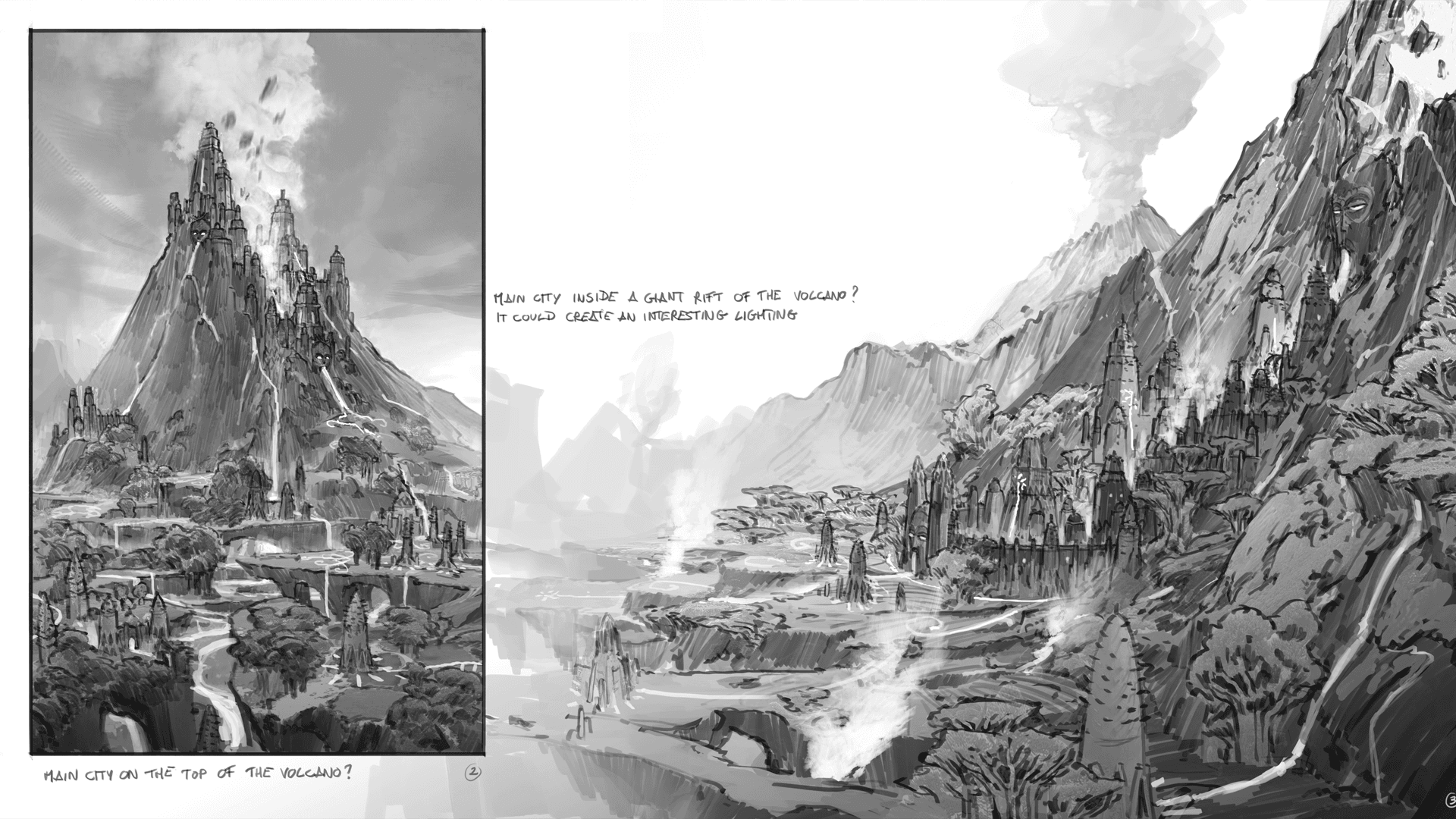
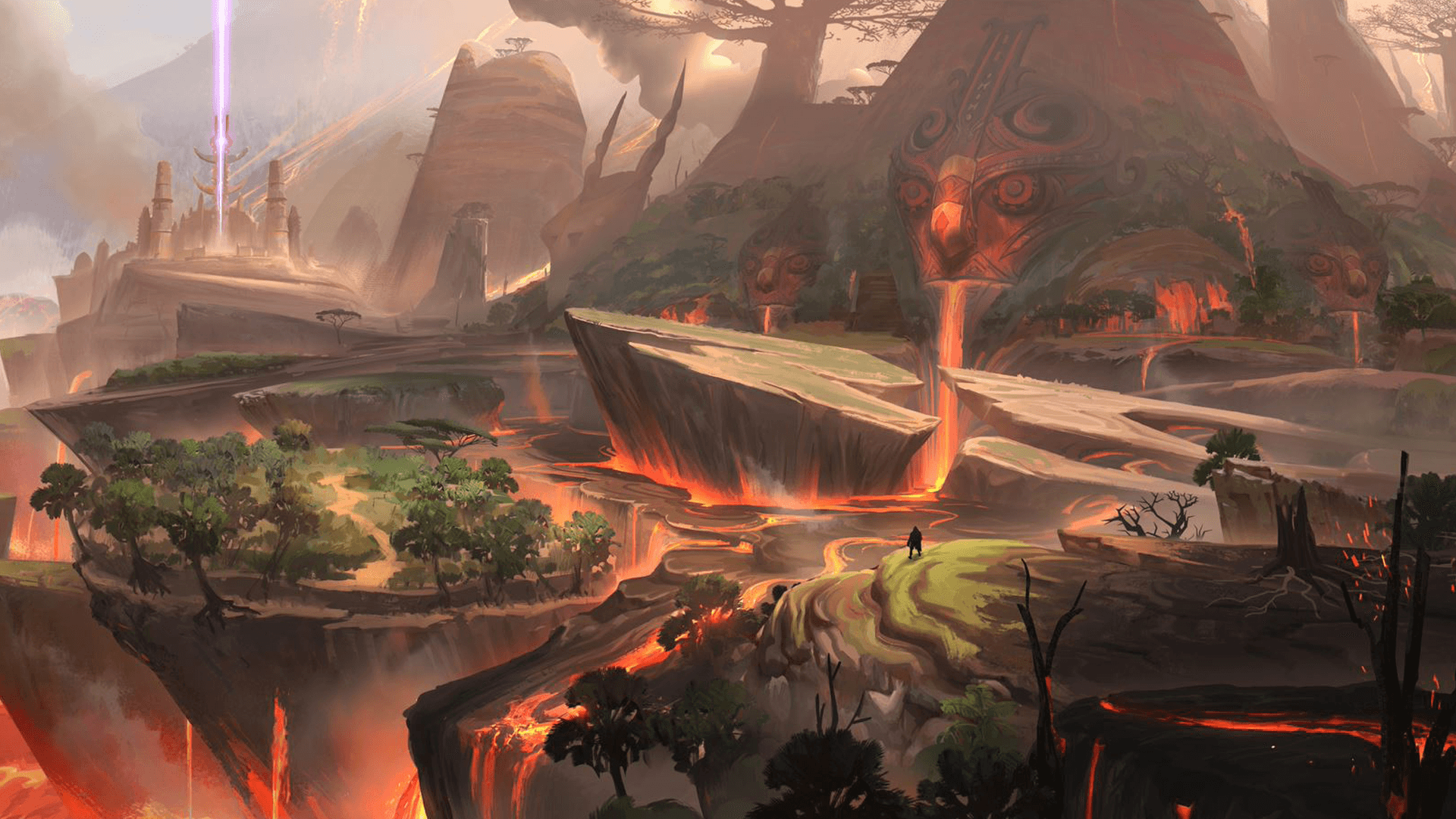
Over the centuries, life has taken root within the volcanic rock—sometimes left to grow freely, sometimes carefully shaped—covering this chaotic landscape with colossal trees and majestic structures.
"There is this balance between preserving nature in its wild state and the Elementalists' desire to shape the world around them according to their beliefs," Arthur explains. "Even the lava channels have been tamed into ancient glyphs, while the buildings, constructed from adobe and wooden beams, further reinforce the arena's organic identity."
By taking the action to a previously unexplored region of Ashkenon, the team wanted to introduce an additional layer of vertical gameplay to the world of Spellcasters Chronicles. Hiram is built around three distinct elevations, interconnected by several pathways reserved for smaller creatures.
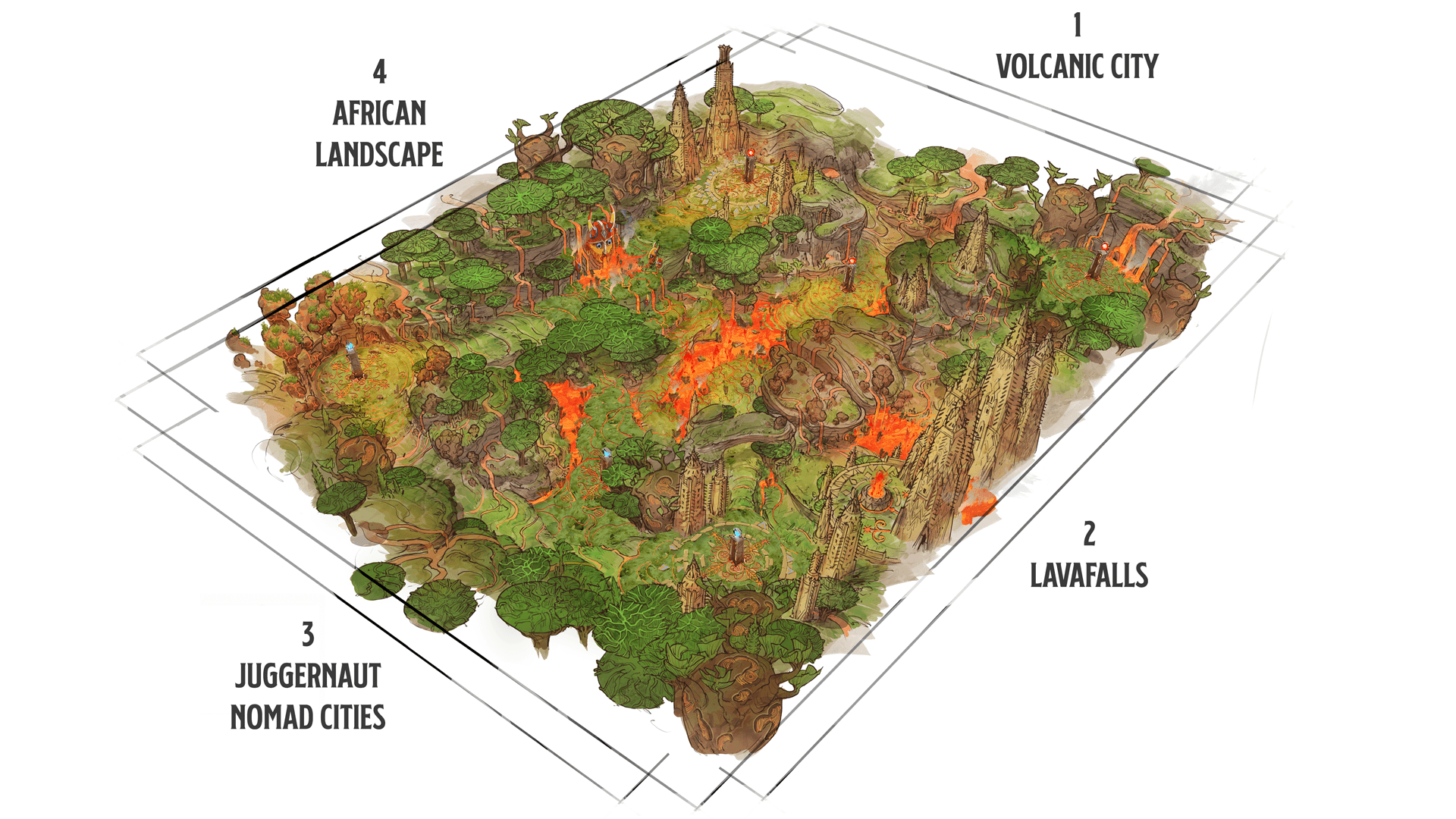
Another major gameplay feature stems from this vertical design combined with an environment full of ledges and crevices, allowing players to sneak, hide, and launch surprise attacks—or, conversely, gain the high ground by taking shelter inside the arena's structures.I wanted a place that felt both mysterious and comforting—a place players would enjoy returning to—while reflecting the unique aesthetic identity of each Spellcaster. The architecture had to feel logical, simple, and instantly readable."
The Fire Land would also have encouraged players to make strategic use of the many natural elements scattered across the battlefield.
"Lava prevents small creatures from crossing and burns larger ones unless they are infused with fire. There are also pools of water, wind currents and vegetation that players can exploit during combat. On top of that, the arena features an exclusive boss designed to encourage aerial battles between both teams. Hiram would undoubtedly have rewarded bold, high-risk gameplay, with the character moving around the workshop serving as the backdrop to the interface itself, evolving as the player interacted with it."
CURSED SWAMPS OF YGGARIL
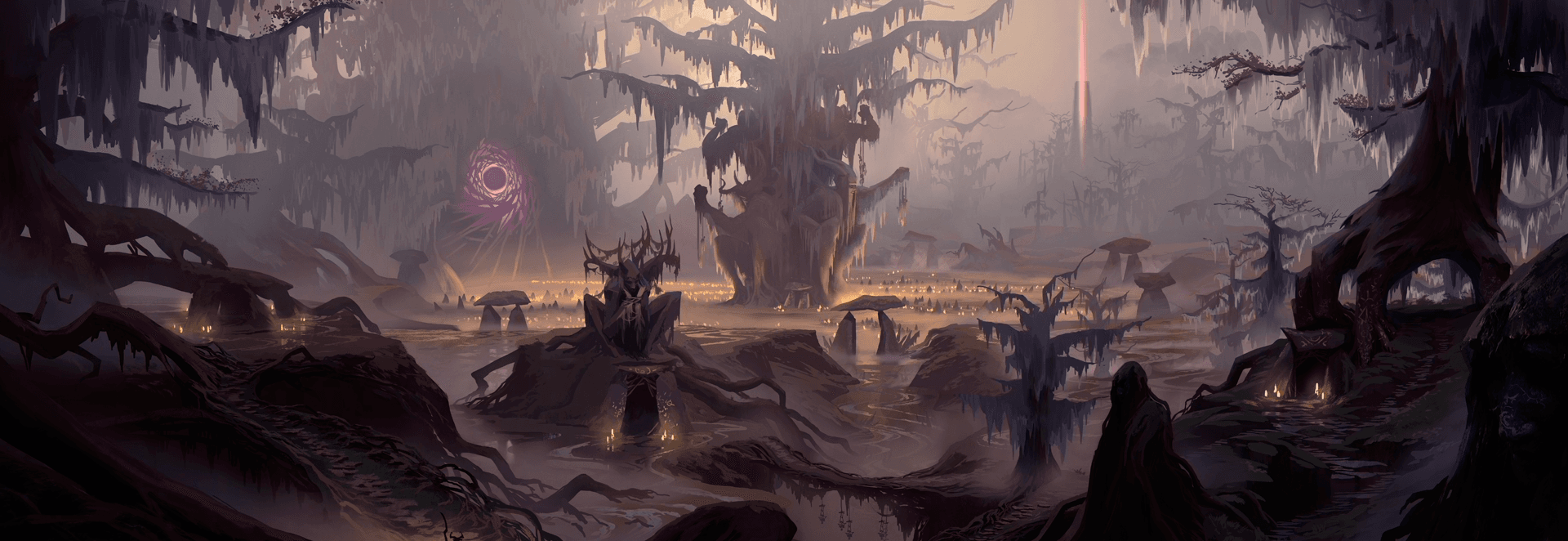
Introduced as one of the game's flagship Spellcasters during its earliest public presentations, the Swamp Witch was also meant to receive her own dedicated arena: the Cursed Swamps.
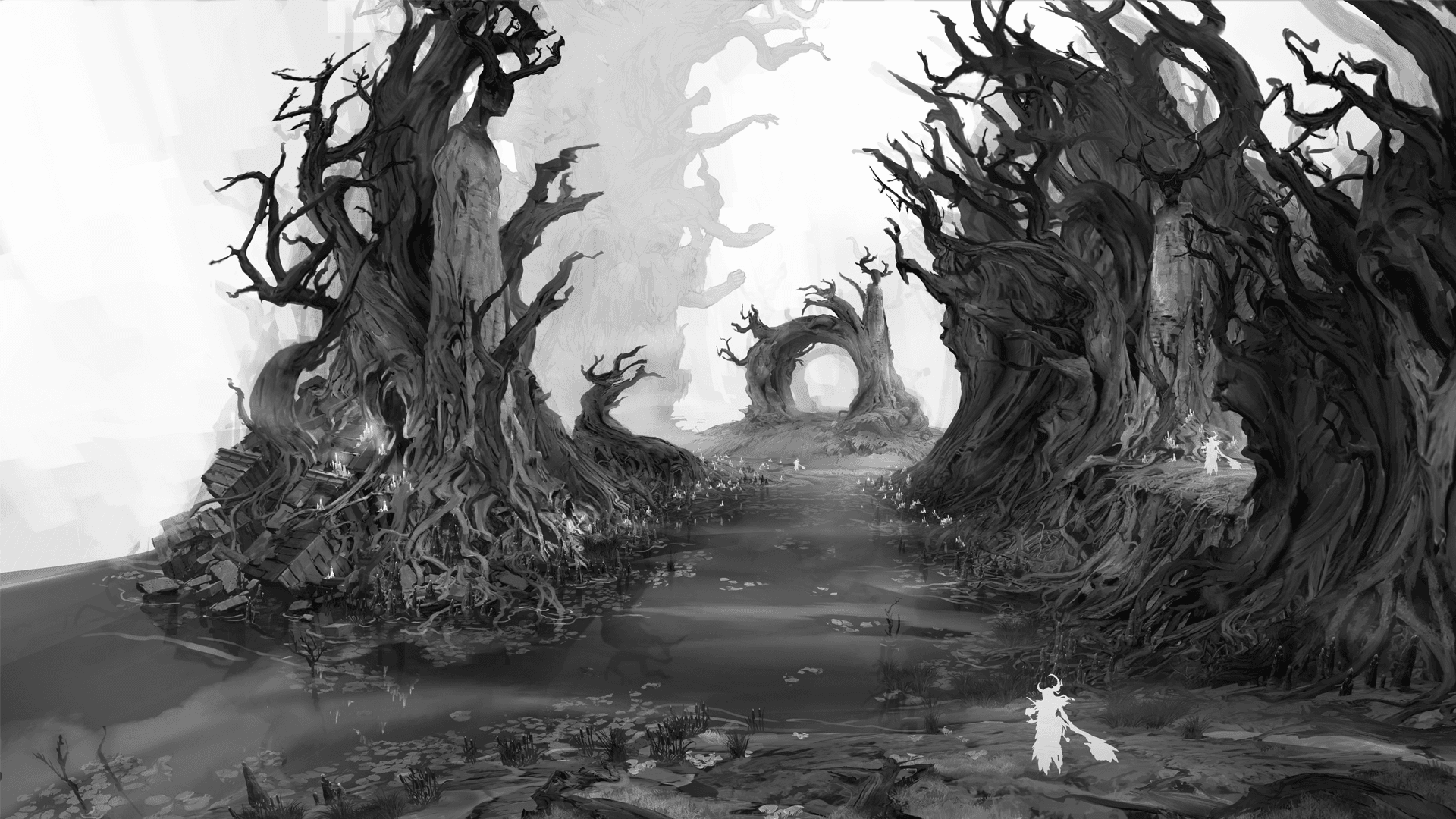
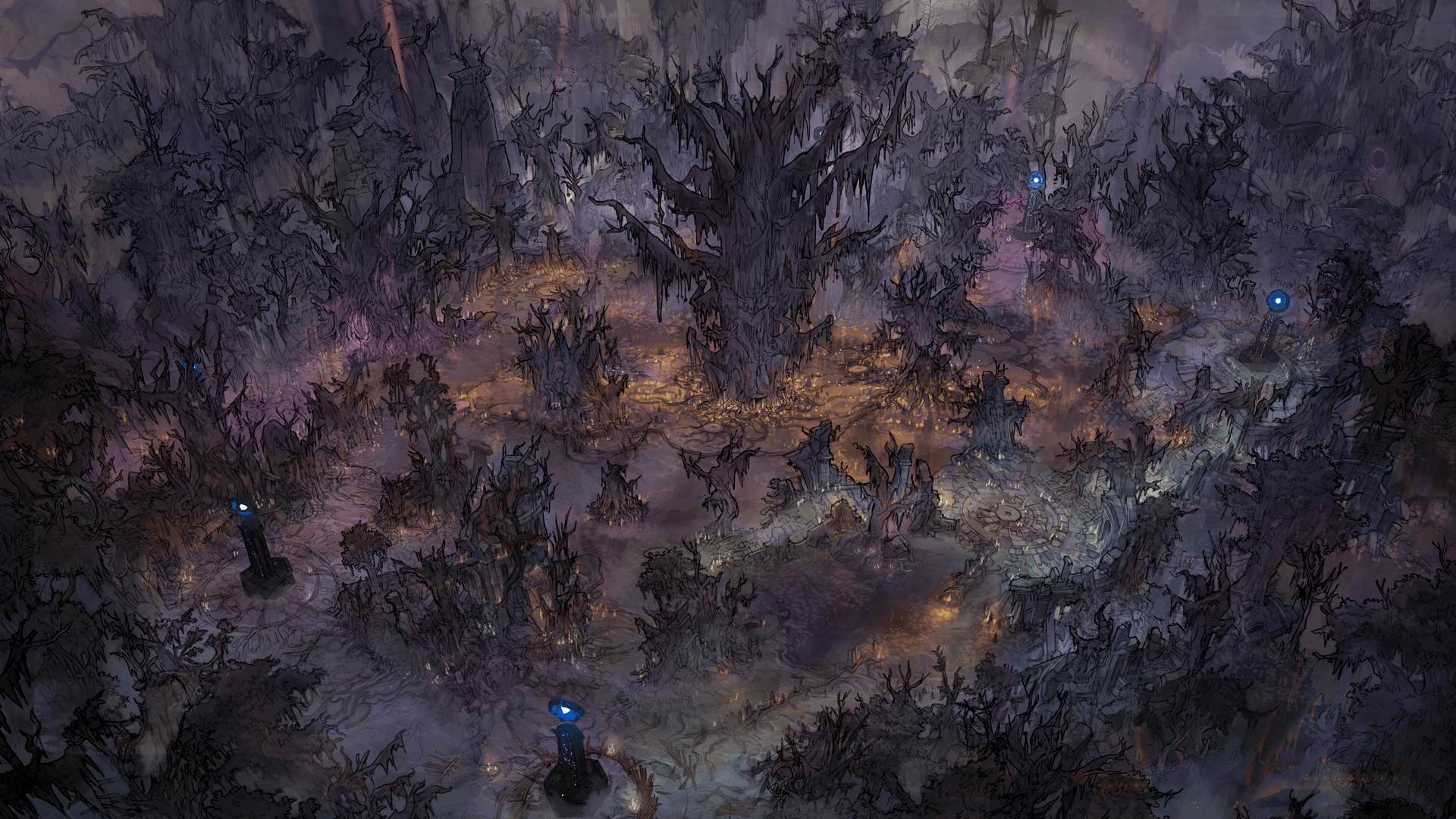
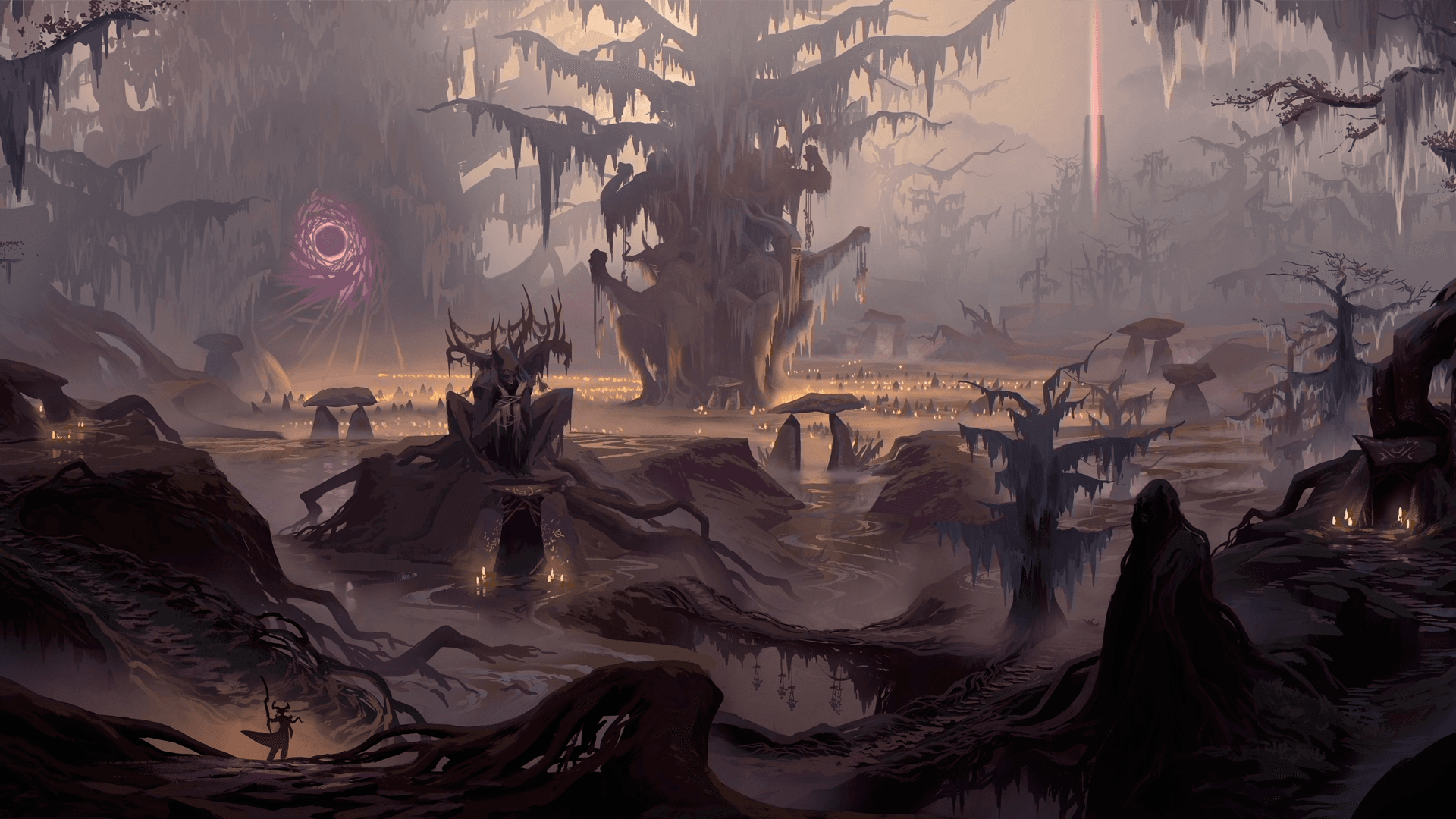
"The entire atmosphere of the arena revolves around the idea of nature itself being twisted by the presence of the Swamp Witches," Arthur explains.
Visual identity was only one aspect of the design. The team also wanted this arena to offer gameplay radically different from the previous maps, which led to its distinctive X-shaped layout, with the center acting as the primary strategic objective.
"We deliberately reduced the amount of verticality to emphasize ground movement, creating intertwined paths that naturally encourage confrontations," Arthur reveals. "Meanwhile, the airspace remains relatively open to give Spellcasters greater freedom, while the trees provide cover that lets players alternate between defensive and offensive playstyles."
Another defining gameplay feature is that nearly 70% of the arena is covered in water. Players would have needed to use it wisely, as certain areas slow down smaller creatures or even block their progress because of their depth.
The Cursed Swamps were also designed around a unique pair of exclusive bosses inspired by the Spider Queen.
"They would have needed to be defeated within a specific time window, rewarding strong coordination between teammates."
With its highly readable layout, its structure unlike any other arena, and the introduction of environmental gameplay mechanics, the Swamp Witch's arena represented the evolution of the Spellcasters Chronicles design philosophy.
"We felt this arena truly embodied what made a great Spellcasters Chronicles battlefield—where every single element contributes to its identity and creates a unique way to play," Arthur concludes, with a hint of nostalgia.